The Bell

When bombs drop
drones strike
snipers fire
who is killed
but I?
The bell keeps its toll
Bong
Bong
Bong
ringing in the pale cloudless evening
peeling in the song of morning birds
clanging
can’t it stop clanging?

It tolls for me
I made it so
I pushed the button
looked through the sight
pulled the trigger.
You say I did not
I say I did
for all that I did not.

Taps is played
flags furled, found
trampled in the dirt
of places I’ve never been.
We make our way home
in the quiet of night
have a cocktail
cheer the brave lads
sleep disquieted sleep.


Portland, Oregon – April 27, 2016

As an American citizen, if I do not recognize my part in the horrors inflicted on the world by our weapons and our own brand of terrorism, then I am just choosing blindness.

Of course, inspired by the Rev. John Donne’s “For Whom the Bell Tolls.”
Letters

I copied letters, pages of letters
a boy in a house near a curving beach
kneeling on the floor beside the bookcase
as if in prayer hunched over lined paper
glasses slipping down nose, tongue teeth biting
before summer’s screen door opened for me.

I slipped through the cracks between the letters
out of the corner and into the world
strung with the meaning of words lettered formed
strung on the white silence of my life’s page.

Letters drawn by children on a curved beach
with sticks and dragging heels who loved and played
then came a wave washed the letters away
in susurrus roar into the moon tide
where children trace letters –

They sleep.  They dream.


Portland, Oregon – April 24, 2016

Dear Mr. Maxwell

Thanks a lot!  I started reading your book
On Poetry – Oh, what I’ve been missing!
But I knew I should take a second look
after many years I had been dissing
the need to take my work more seriously –
you have many excellent things to say
and in a way not imperiously.

I must begin to look without delay,
following on my many disasters,
at forms employed by the artful masters
who knew what they were doing when they wrote.

Of Maxwell’s many lines in brief I’ll quote:
“Line break is all you’ve got” on the white page
to separate your poem from your prose –
the time, the beat, the rhythm of the stage.

A poet yet in time I’ll be, who knows?


Portland, Oregon – April 22, 2016

This wreck of a rhyming pentameter poem is “inspired” by beginning to read Glyn Maxwell’s book On Poetry published in 2012, Oberon Books. It’s a good choice to begin my more careful look at the meaning of poetry, how to read and write it.  I recommend it.  One problem is that, as I look at poetic forms and how poetry works, I’m more challenged in actually writing, worried that I’m not “getting the form” correct.  Well, there’s a balance thing I need to live with as I try to learn some things.

On My Writing Poetry

Creativity and learning need each other.

I have been creating lately and thankfully, but I haven’t been learning, at least in the poetic sphere, and I now understand that I need to learn more about this essential craft – how others write poetry and think about it.  While I trust my instincts, the wisdom and experiences of others will inform my growth as a poet and elevate the quality of my work.

I began to write as a senior in high school, inspired by Mrs. Evans and her teaching us about poetry and poetic forms. So, I’ve long known about formal classic methods, such as rhyming iambic pentameter, but I rarely paid attention to them in the years since. The question is, should I? Should I pay more attention to and practice formal poetic methods? Well, that is what I am now exploring. There are, of course, many poetic forms, classic and modern, and the discernment of what forms will work for me could take some time. What I know is that I am not too old to learn and the continuing search for knowledge within the creative life is important.

There are many voices expressing their thoughts on what they believe makes for good poetry. How do I know who to listen to? Well, I guess I’ll just explore the field a bit and see what comes of it. For those of you who have read my work, liked some of it, and maybe are following, I want to let you know I appreciate you and hope my explorations will help me to be a better poet in the future. Knowing that even a few people are interested in reading my work is very exhilarating to me.  I welcome your thoughts on the matter.  Again – my thanks! Tom


Portland, Oregon – April 14, 2016

1968

Fear then
in the streets
on the young faces.

I was young
afraid.
Anger then
in the crowds
on all the troubled faces
in all the broken streets.

I am older
feeling 1968
in the streets
on the faces.
Creeping fear returns
and anger.

Is it a new world
on the dark horizon
or a dying world?
A cosmic egg
we thought
breaking in violence
pouring onto the worlds wounds.

It is for the young
to decide
if they want
a world renewed
that we, broken,
gave them.


Portland, Oregon – April 12, 2016

Spring Garden

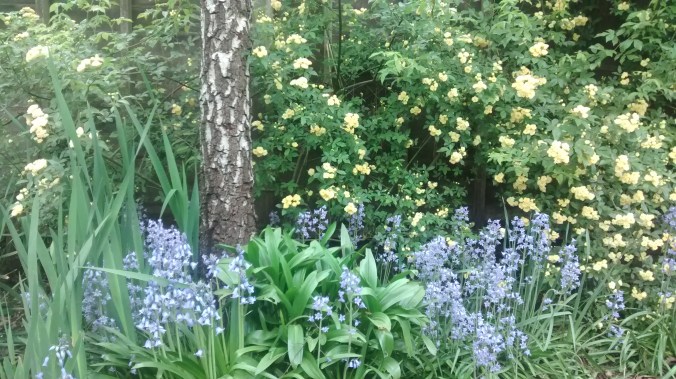
Spring Garden 4.11.16

Deception in spring’s beauty
lovely garment of green, yellow, blue
that does not tell
speaks not nor whispers of autumn
will not say from what cold and darkness it came
forgotten winter altogether.

Fools believe in beauty lasting
rising green through damp and dark earth
on which to count life’s days
towards eternal spring.

Fools cavort in flowered fields
dance in coronal suns shine
traipse in petals, seeds,
dead and dark autumn fallen leaves;
twirl in imprudent delight
as imps and fairies
in forgotten worlds
timeless whorls
endless whirls.


Portland, Oregon – April 11, 2016
Photo is my own, taken this date.

Under The Maple Tree

IMG_20160406_134230117

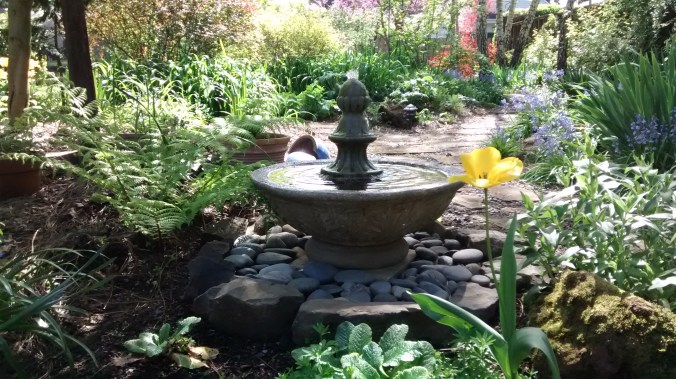
Fountain pool’s light and water
under maple branch and leaf
tulip yellow curling petals
near the pathway greens of spring.

I will fill the fountain basin
when the tulip fades away
wait for spring to come in splendor
underneath the spreading maple tree.

Another one will fill the fountain
watch the tulip raise its head
sit in stillness by the pathway
as the spring wind stirs the maple leaves.


Portland, Oregon – April 6, 2016
Photo is my own, taken this date.

Sadly, the falling branches of our ponderosa pine sheared off half of the maple during an ice storm, December 2016.  These rest did not then survive.

Shadows

Do shadows have the power to heal?
Leaves of the Japanese maple
fluttering on porch steps?
Ancient fern fronds, long and pointed,
bending over in layered impressions?
Lace curtains brushing painted walls?
Half open shutters lining kitchen floors?

Spring
sun bending through all the arching flowers
autumn
lowering, heart-breaking
through the remains of the glorious season
spinning away sun
gold falling from the sky
seeding its formed and moving shadows
with ethereal and healing light.


Portland, Oregon – April 3, 2016


Change

Thesis
Antithesis
Synthesis


It is time
when change,
a young person’s game,
is forced on us all.
The abyss opens
old men fall, whimpering,
begging for mercy who gave none.
Wise women, who birthed cultures,
step to the edge but cannot stay their feet.
Poets forget words and dreams
resort to formulaic constructions
as if rhyme or meter mattered a whit
in making a new world.

We are lost in a sea of change
who did not read the signs before us
telling of the surging wave
swelling from deep tremors
conspiring with the worlds winds above
to tell us that we had lost our way.

Our Noah awaits us
in a boat too small
a sea too big
without oars, rudder, or mast.


Portland, Oregon – March 30, 2016

The “Hegelian Dialectic” expressed above as “thesis, antithesis, synthesis,” is taken from Georg Wilhelm Friedrich Hegel who introduced a system for understanding the history of philosophy and the world itself, often called a “dialectic”: a progression in which each successive movement emerges as a solution to the contradictions inherent in the preceding movement.

Source at:
http://www.age-of-the-sage.org/philosophy/history/hegel_philosophy_history.html

After Easter

After Easter alleluias
brunch and bunches
of spring flowers in vases
the effort of work
age gathering letting go
staring at the moon
sweet face before our eyes
brushes of spring and autumn.

Vigil

The blaze of the new fire –
primal roaring crackle
throwing violent sparks into the night
stills to silent flames tamed
on candles held singly against the darkness.
Sung proclamations batter church walls
bells ringing raising banners
procession leading white robed dancers
rafters receive rising incense clouds
Easter bloom from death.

Fade to succession of days
leading away from steeples
oaken doors clothed altars hushed apses
into snug pubs food carts coffee joints
bestowing on each other our time
broken laughter intimate love words
knowing neither beginning or end
there too am I with a raised glass
remembering occasionally
fleeting moments of clarity
like bells far away
the new fire burns
dancers whirl in the night
incense billows in deep forests
stars hold celestial banners
the air itself breathes alleluias.


Portland, Oregon – Easter Sunday, March 27, 2016

The images in this work are from the celebration of the Easter Vigil, the culmination of the three day service known as the Triduum, or, the “Three Days:” The Vigil is held on the Saturday evening before Easter Sunday

Also, my recognition and thanks to the great French poet Arthur Rimbaud for his beautiful line: “I have stretched ropes from steeple to steeple; Garlands from window to window; Golden chains from star to star … And I dance.” I thought of that when I wrote, above, “Stars hold celestial banners.”